


The Story of 99 Main Street
A House with More Than Two Centuries of History
The house at 99 Main Street has stood at the heart of Kennebunk, Maine since 1799. It has been home to merchants, sea captains, a Civil War naval officer, a doctor, entrepreneurs, an artist, and now — it’s a guest house. welcoming visitors from all over the world. Every family who has called it home has left something behind. We are honored to be the latest chapter in a very long and remarkable story.
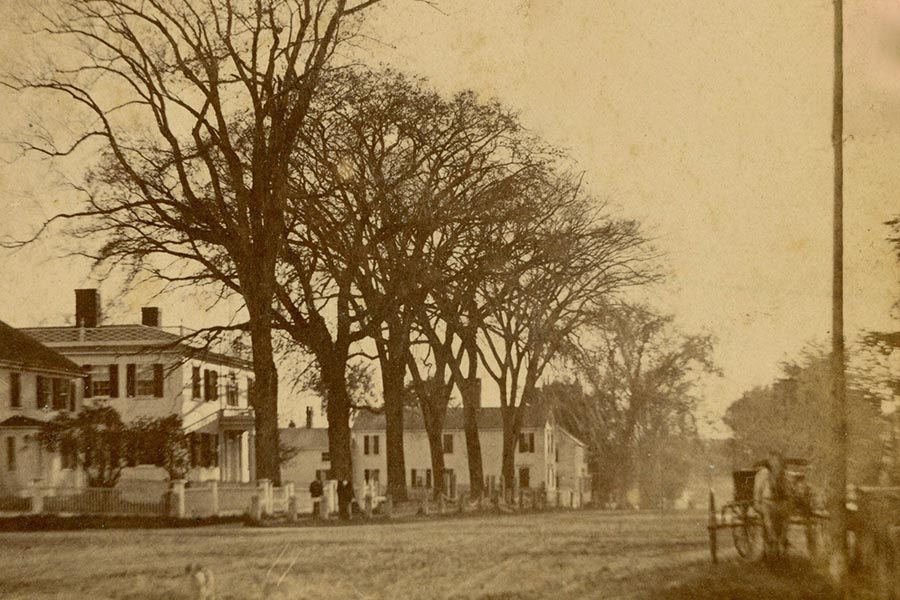
On the very day of the Battle of Lexington — likely without knowing it — Theodore Lyman and James Kimball plant elm trees on this lot. Those trees would give the property its name more than a century later.
Nathaniel Frost arrives in Kennebunk, establishes himself as a merchant, and commissions housewright Thomas Eaton to build the Federal-style home at 99 Main Street for his family. He marries Abigail Kimball, daughter of the man who originally owned the land, in 1798.
Nathaniel Frost dies of consumption at just 43 years old, leaving his estate in debt. Abigail receives only dower rights and the family relocates to Cambridge, Massachusetts, closing the first chapter of the home’s story.
Following a court order to sell the estate, Joseph Storer purchases the house for $1,675 and leases it to his brother-in-law Charles Cutts — then serving as Secretary of the United States Senate. A quiet but distinguished period for 99 Main Street.
Isaac Lord of Effingham, New Hampshire purchases the property for $2,600. He installs Jonathan Fiske — hired to manage the new Mousam River cotton mill — as the home’s occupant. It is a moment that ties 99 Main Street directly to the industrialization of Kennebunk, as the cotton mill rises along the river just a short distance away, built under Fiske’s own supervision.
The Mousam River cotton mill burns to the ground in what is believed to be arson. The fire is devastating for the Fiske family, who lose their remaining assets and are forced to relocate to Lawrence, Massachusetts. An abrupt and dramatic end to their chapter at 99 Main Street.
Isaac Lord transfers the property to his son James, who eventually moves into the home and operates a general store directly across the street. James marries Mary Ann Bell of Sherborn, Massachusetts in November of 1839 and the couple raises three children within these walls — bringing a warm domestic life back to the house after the upheaval of the mill years. In April of 1854, James sells the home and two acres of land to Captain Noah Nason for $4,500 and the Lord family departs for Framingham, Massachusetts.
Captain Noah Nason wastes no time making his mark. He marries Hannah Killham in October of 1854 and sets about transforming 99 Main Street into what local chronicler Andrew Walker describes as the most lavishly furnished house in town — sparing no expense in the process. Over the following years Nason adds an iron and stone fence, a handsome front portico, a dining room addition, fresh paint, new wallpaper, and extensive interior renovations — investing an estimated $1,200 to $1,500 on top of the purchase price. By 1863, worth at least $70,000, Nason moves his family to Westborough, Massachusetts and sells the home to Doctor N. Emery Smart and Captain William Symonds. It is around this time that Andrew Walker begins referring to the property simply as “Elm Place” — a quiet acknowledgment of the trees that have stood watch over this lot since 1775.
The home is sold to Doctor N. Emery Smart and Captain William Symonds. Their time here is marked by both adventure and tragedy. Symonds survives a dramatic shipwreck 450 miles from Montevideo, serves in the U.S. Navy during the Civil War, is hospitalized and believed near death — only to make a full recovery. Sadly, in October 1874, Captain Symonds, his wife, and daughter perish when their ship is rammed by an iron-clad vessel in the English Channel. The house falls quiet.
Dorothy Smart, who had remained in the home, passes away and bequeaths the house and all its contents to her nephew Nathan Dane Jr. He moves in that December and remains for over two decades.
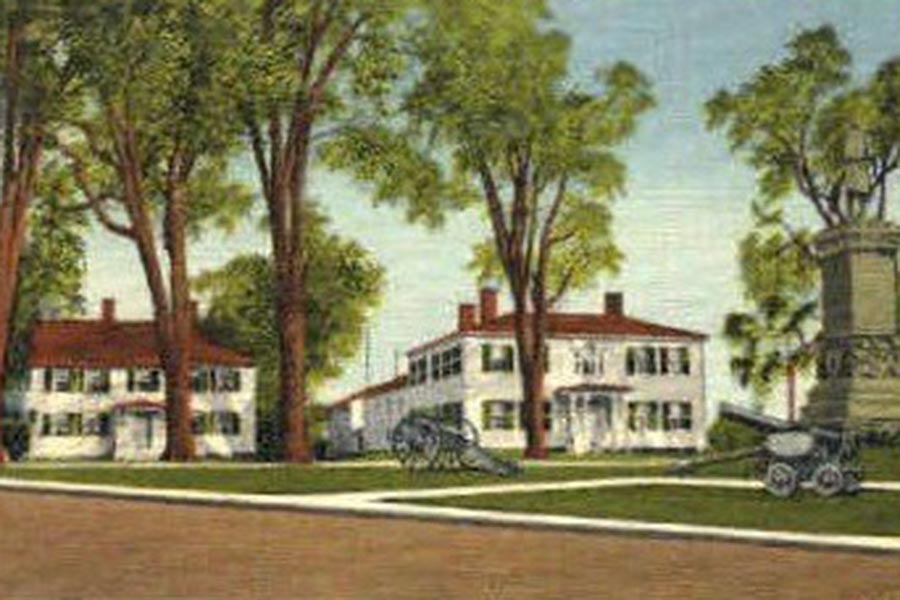
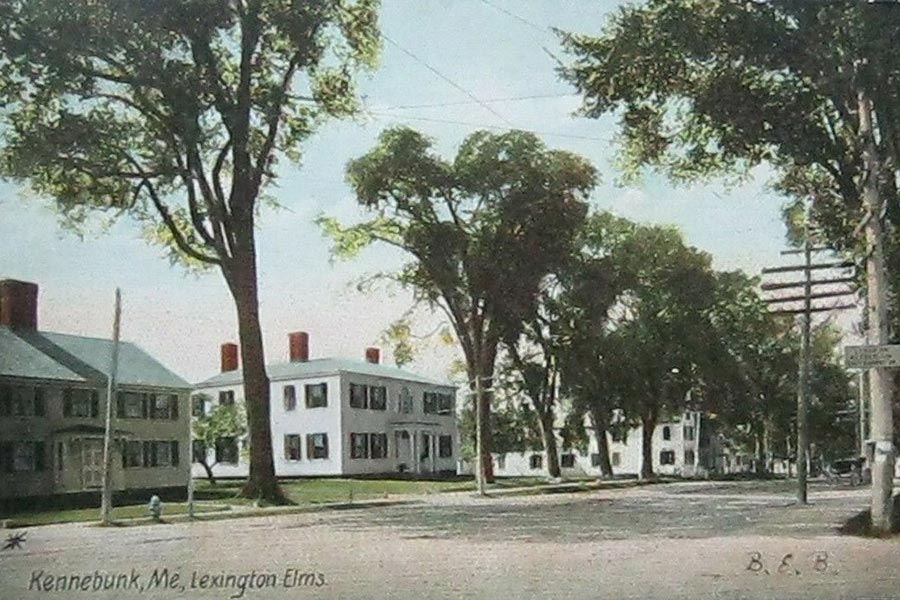
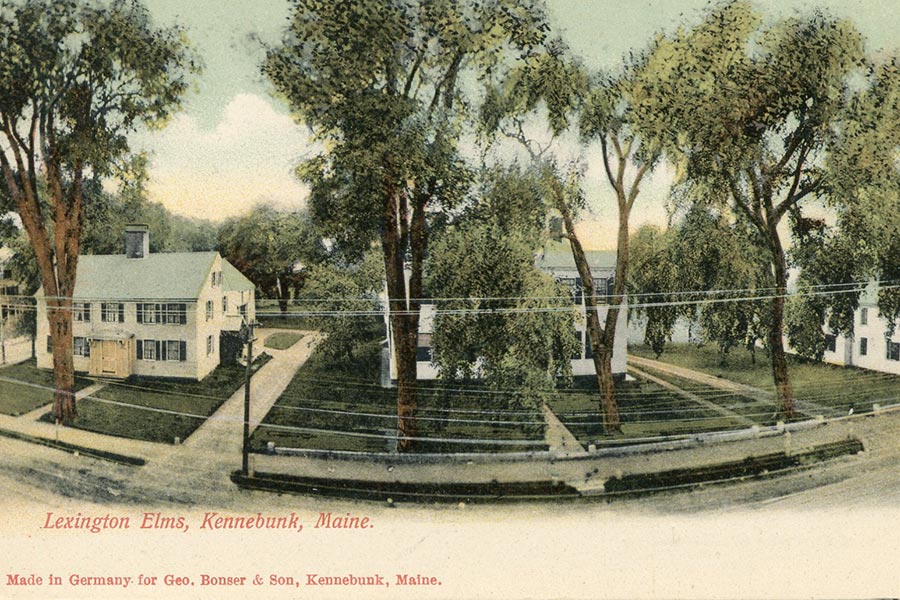
Nathan Dane Jr. sells the property to David Littlefield, a local blacksmith and tax collector, for $4,000. In 1904 David sells the property to his son, John. It is under the Littlefield family that the property first becomes known as Lexington Elms — a nod to the historic elm trees that have graced the lot since 1775.
John Littlefield passes the property to his brother William O. Littlefield and sister Philla E. Howe in 1919. William is a well known local figure, operating several businesses in the area including the beloved Dipsy Baths at Kennebunk Beach — a reminder that life along the Maine coast has always centered around the water. In 1936 Edwin and Helen Marshall purchase the property, and it is believed that during their ownership the front portico — added by Captain Nason back in 1858 — is removed, quietly changing the face of the home. In 1947 the house passes to Norman and Anne Wiggin, owners of the Blue Wave Gift Shop on Nason’s Lane, before being sold in 1957 to Doctor Harry and Edith Lapirow. Doctor Lapirow opens a medical office in the home, bringing yet another kind of community purpose to 99 Main Street. The Lapirows also plant a beautiful rose garden in the courtyard.
A hurricane fells one of the original elm trees in 1954. Dutch Elm disease claims the rest in the 1970s, ending a nearly 200-year legacy rooted — literally — in the day the American Revolution began.
The Lapirows sell the home to Tom and Katherine Chappell — co-founders of the beloved Maine brand Tom’s of Maine. Katherine is also a talented and accomplished painter, printmaker, and installation artist. The Chappells raise their family within these walls and pour tremendous love into the property, most notably in the thoughtful design of the gardens and landscaping. Much of that vision was spearheaded by Katherine’s aunt and also their dear friend, gardener Louise Joubert, who masterfully designed the flow of blooming flowers and oversaw the upkeep of the grounds — a living legacy that can still be felt and seen in the property today. It is a chapter defined by creativity, intention, and deep roots — a fitting stewardship for a house with this much history and heart.
The Patch family purchases 99 Main Street with a vision that feels perfectly suited to a house with this much history — to live here together, across generations, under one roof. For the Patch family, this is not simply a real estate purchase. It is the fulfillment of a lifelong love affair with the state of Maine, one that stretches back to when Meg’s grandfather was a child making his own memories on this coast. Maine has been a constant in this family’s story for decades — a place they returned to year after year — and now, at last, it is home.
Meg Patch Howard and her husband Andrew Howard open Lexington Elms — A Guest House at 99 Main Street, reviving the property’s historic name and beginning the next chapter of this remarkable home’s story. After more than two centuries of merchants, captains, doctors, artists, and families, the door is open once again. This time, for you.
*The historical information presented on this page was made possible through the research and records generously provided by The Brick Store Museum and its historians in Kennebunk, Maine. We are deeply grateful for their dedication to preserving the rich history of this community and this home. To learn more about The Brick Store Museum and their work, visit brickstoremuseum.org